
Future Headspace is an experiment exploring how the commercialisation of identity affects our understanding of reality, particularly in Western tribal traditions. The artwork playfully references esoteric symbolism to create surreal narratives that challenge the fragility of meaning and undermines the hierarchies that attempt to subjugate creative expression.
FUTURE HEADSPACE
The artwork, writings and projects explore memories not yet made, experiences that one dreams about as if they happened to the ‘other’ self but realised days later as occurring in the ‘real’ world to one’s conscious self.
I aim to challenge the orthodox concepts of truth. I hope to establish in all viewers the possibility that everything is true (as well as the potential that nothing is true; but if that is true, that ‘nothing is true’, then that in itself cancels itself out, leaving only the possibility that ‘everything is true’, plausible) and that all perceptions are as integral to the experience of human reality as a total unified theory of understanding; understanding nothing has as much clarity as understanding everything.
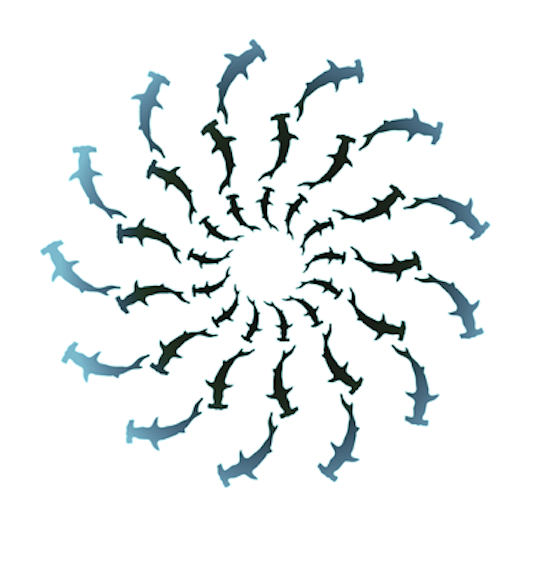


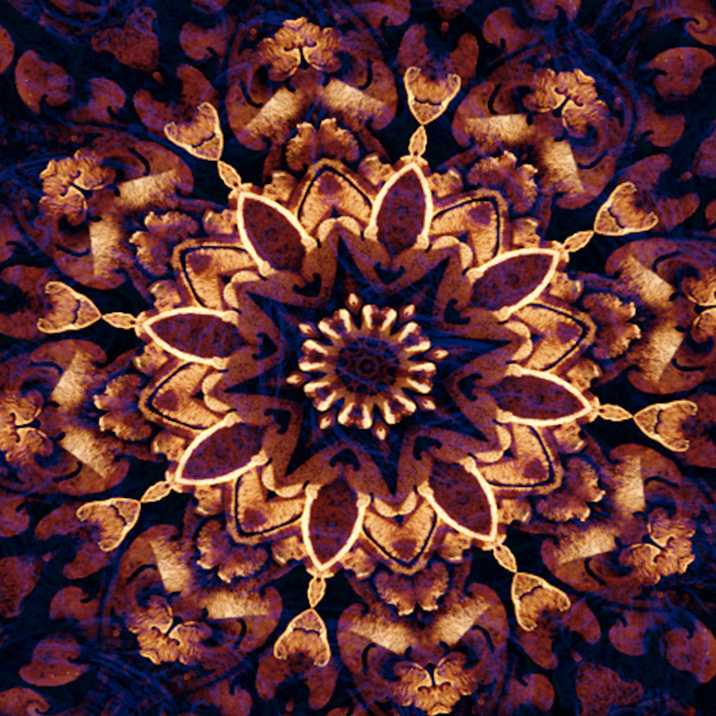
Most of my explorations, in one way or another, discuss the repetition of archetypal religious imagery and the resulting disassociation of subject and meaning. I find it whimsical that repetition was used to enforce and underscore dogmatic traditions, but now (in my opinion) it only serves as an analogy for our contemporary acquisition of a copy-and-paste culture.
Tradition and modernity are very rarely mutually beneficial. As the presumption of archaic religious ideologies governs our whole world, the ‘Now‘ is at odds with the paradigm within which it exists.
*** Video contains flashing lights ***
*** Well, a flashing light! ***
In my recent explorations, I have focused on the borderline between our unconscious and conscious realms, drawing on concepts from my previous work on the Fractal Lotus. The act of religion is an attempt to bridge the gap between these two dimensions of consciousness in which we constantly reside.
I am particularly interested in how the lines between these states of consciousness overlap and how we struggle to identify which realm we are in, and inversely how we come to identify with that struggle. My current research examines physical structures and symbolism in the temples of the Khmer Empire to discover new fractal coastlines in symbolic identity patterns.
For instance, Angkor Wat physically represents the Hindu Mount Meru, a mythical realm of creation. The manifestation of these unconscious states in real stone has profoundly impacted human culture and identity throughout history. To unleash our creative potential, we must break the manmade boundaries between our unconscious mind and our conscious perception of it.
However, to break these boundaries, we must first understand what they are made of: synthetic symbolic identities (SSIs). These SSIs are the building blocks of empires and the cause of the catastrophic collapse of utopias.
You receive your SSI number when you first enter the conscious realm, before you have had a chance to even realise you have crossed the line. And according to the fine print of these SSIs, re-assignment is prohibited. Yet, located in the negative space between the fine print, the undenoted in a semiotic form, as it were, is the knowledge that everything is made up, a fabrication, a loose collection of maybes parading on eggshells as facts.
 Future Headspace